Designing Effective Merchandise for Orange County Charity Runs in Laguna Hills, CA, United States
Charity runs in Orange County raise millions each year, but the merchandise table often determines whether your event feels professional or thrown together. The right race shirt, finisher medal, or tote bag does more than generate revenue—it turns participants into walking billboards for your cause long after the finish line. For events based in Laguna Hills, CA, United States, the design process requires balancing coastal climate considerations, local brand culture, and production timelines that actually work for your planning committee.
Why Race Merchandise Matters More Than the Swag Budget
Participants register for a cause, but they remember the shirt. A well-designed piece of event merchandise creates a sense of belonging and gives runners something to show for their effort. It also drives early registration—people want the shirt, so they sign up before sizes sell out.
In Laguna Hills specifically, the local running community overlaps with hiking, cycling, and youth sports networks. Your merchandise often ends up worn at school drop-offs, trailheads, and weekend farmers markets. That means your design needs to look good in casual settings, not just on race day. A cluttered or overly corporate design gets relegated to a drawer; a clean, thoughtful design gets worn weekly.
From a fundraising perspective, merchandise typically accounts for 10–20% of total event revenue when done well. That number drops to near zero if the apparel arrives late, shrinks in the wash, or features a design that embarrasses the wearer.
Starting With the Race Theme and Audience
Before any artwork gets created, define who is running and why. A family-friendly 5K supporting a local school foundation needs a different visual tone than a competitive half marathon raising money for medical research.
Ask these questions during your planning meeting:
- What is the emotional hook of the event—hope, community, endurance, or celebration?
- Who is the primary buyer: parents, corporate teams, serious runners, or casual walkers?
- Will the same design work on a technical tee, a cotton shirt, and a finisher medal?
- What colors represent your cause without clashing with sponsor logos?
For Laguna Hills events, consider the local aesthetic. Orange County leans toward clean, modern, and outdoorsy. Designs that incorporate local trail names, the Saddleback mountain silhouette, or subtle nods to the area’s open spaces tend to resonate more than generic stock graphics.
Choosing Apparel That Matches the Climate
Southern California weather in fall and spring—the peak charity run season—is mild but unpredictable. Mornings can start in the high 50s and climb into the 70s by late morning. That temperature swing dictates fabric choices more than any other factor.
For most Laguna Hills races, a lightweight performance tee or a tri-blend cotton shirt works better than heavy 100% cotton. Performance fabrics wick moisture and feel comfortable during the run itself. Tri-blends (cotton, polyester, rayon) offer a softer hand feel and a slightly vintage look that people actually wear again.
Here is a quick comparison to guide your selection:
| Apparel Type | Best For | Pros | Cons |
|---|---|---|---|
| 100% Cotton Tee | Walk-up registrants, budget events | Low cost, easy to print | Retains sweat, shrinks, less likely to be worn again |
| Tri-Blend Tee | Family 5Ks, community events | Soft, flattering fit, high repeat wear | Higher upfront cost |
| Performance / Dri-Fit Tee | Competitive races, longer distances | Functional during run, technical look | Can feel less casual for everyday wear |
| Long-Sleeve Tee | Winter races, early morning starts | Practical for cool weather, higher perceived value | More expensive, less useful in warm weather |
If your event budget allows, offer a premium upgrade option—participants pay an extra $15–$20 to swap the standard shirt for a branded hoodie or quarter-zip. This tactic increases per-person revenue without inflating the base registration fee.
Designing Artwork That Prints Well and Looks Professional
The most common mistake charity run committees make is submitting artwork that looks great on a screen but fails in production. Small text, thin lines, and complex gradients cause problems with both screen printing and embroidery.
Follow these design rules from the start:
- Keep the main logo or graphic within a 10–12 inch print area for the back of a shirt.
- Limit the color palette to 2–3 colors for screen printing. More colors increase cost and production time.
- Use bold, readable fonts. Script fonts are fine for a wordmark but not for event details or sponsor names.
- Place event date and distance on the sleeve or hem, not the center of the chest.
- Design at 300 DPI or use vector files (AI, EPS, PDF). Low-resolution images will look pixelated when printed.
For a Laguna Hills race, consider the left chest placement for a small logo and a larger graphic on the back. This layout works well because it leaves the front clean for sponsor branding or a simple cause statement. It also makes the shirt feel more like retail merchandise and less like a promotional handout.
Screen Printing vs. Embroidery for Race Apparel
Screen printing is the standard for cotton and tri-blend tees. It offers vibrant colors, durability, and the lowest per-unit cost at volume. For runs expecting 500 or more participants, screen printing is almost always the right call.
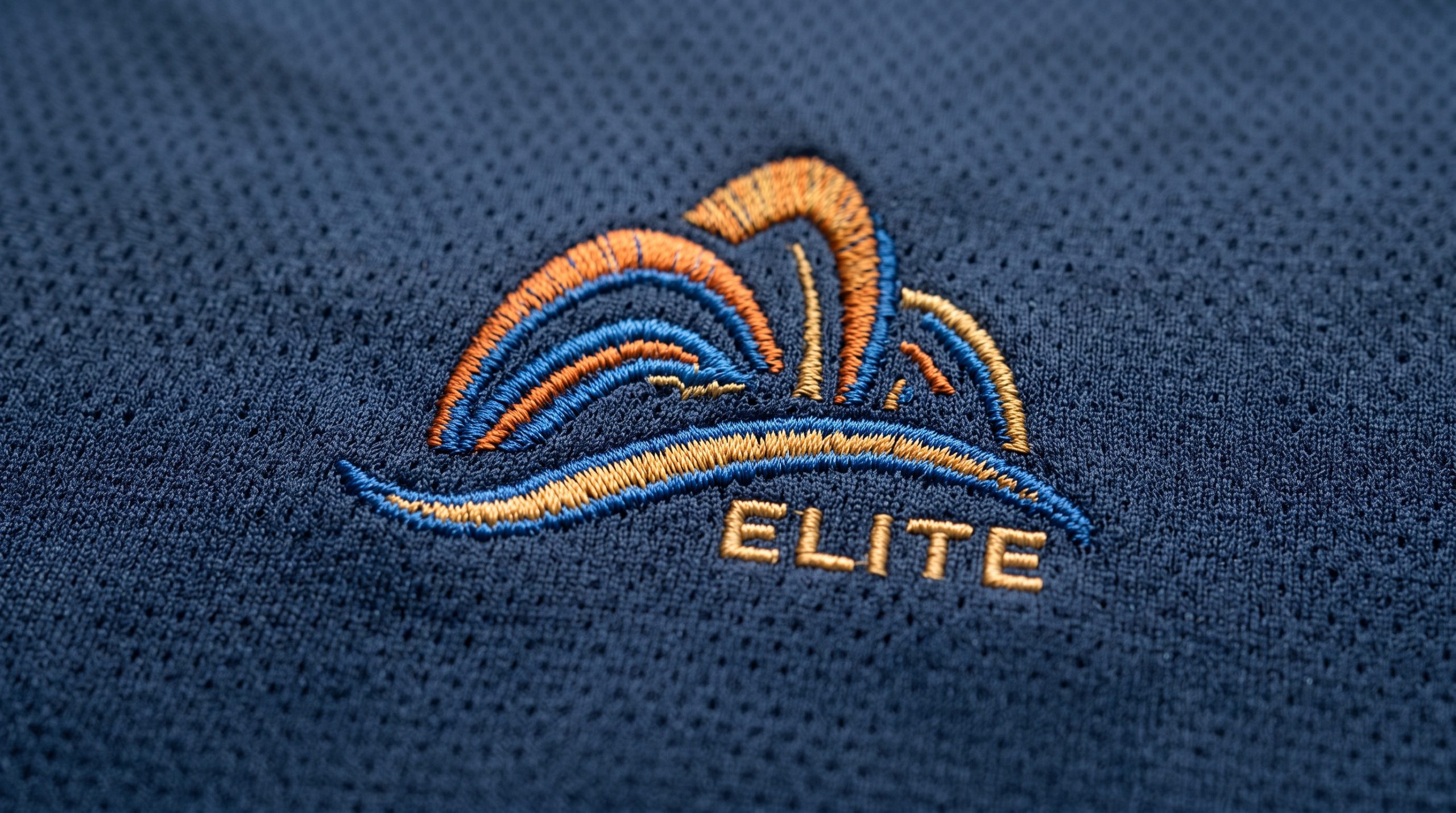
Embroidery works best for premium items like hats, quarter-zips, or towels that you sell separately at the event or offer as VIP registration perks. Embroidered logos look upscale and last longer than printed graphics, but they cost more per piece and take longer to produce. A small embroidered logo on the left chest of a jacket or the front of a cap adds perceived value without breaking your budget.
Ordering Timeline: Work Backward from Race Day
Production lead times are the single biggest source of stress for race organizers. A typical custom apparel order takes 2–4 weeks from artwork approval to delivery, but that assumes no revisions, no stock shortages, and no shipping delays.
For a smooth process, use this timeline:
- 12 weeks out: Finalize event date, order minimums, and budget. Start collecting sponsor logos.
- 10 weeks out: Submit initial artwork concepts to your apparel provider for feedback.
- 8 weeks out: Approve final artwork and place the order. Confirm sizing breakdown and delivery address.
- 4 weeks out: Request a digital proof and confirm the ship date.
- 2 weeks out: Verify delivery. Sort shirts by size and pack for race-day distribution.
If you are working with a local provider like Polished Image Wear in Laguna Hills, CA, United States, you may be able to shave a week or two off the timeline because you can pick up the order directly and handle any issues in person. That local relationship also helps when you need last-minute sponsor logos added or sizes adjusted.
Ordering Extras: Medals, Bibs, and Tote Bags
Shirts are the anchor, but finisher medals and race bibs round out the experience. Order medals 6–8 weeks in advance, especially if you want custom shapes or ribbons with your event name. Stock medals are faster but less memorable.
For tote bags, consider a reusable canvas or polypropylene bag printed with your event logo. These are popular in Orange County because participants use them for groceries and beach trips, giving your cause ongoing visibility. They also replace the plastic bags many events use for packet pickup, which aligns with the environmental values of many local runners.
Cost Factors and Budgeting for Merchandise
Pricing for custom apparel varies widely based on garment quality, print method, and order quantity. Here is a realistic range for charity run budgets:
- Standard cotton tee: $6–$10 per unit at 500+ pieces
- Tri-blend tee: $10–$15 per unit
- Performance tee: $12–$18 per unit
- Embroidered cap: $12–$20 per unit
- Finisher medal: $2–$6 per unit
- Canvas tote bag: $4–$8 per unit
Setup fees for screen printing (creating the screens for each color) typically run $50–$100 per color. Embroidery setup is usually a one-time digitizing fee of $40–$75 per design. These setup costs are non-negotiable, but they drop significantly per unit as your order quantity increases.
If your budget is tight, consider selling merchandise as an add-on rather than including it in every registration. Offer the shirt as a $15 add-on during registration. Many runners will pay for it, and you avoid the cost of producing shirts for no-shows—which typically run 5–10% of registrants.
Common Merchandise Mistakes to Avoid
Even experienced race directors make avoidable errors. Here are the ones we see most often with Orange County events:
- Ordering too many of one size. For a general 5K, order a balanced mix with slightly more M and L. For a competitive race, skew toward M and L. For a family event, order more youth and S sizes.
- Using a sponsor logo that violates the sponsor’s brand guidelines. Get written approval for any logo use before production.
- Forgetting to account for late registrations. Order 10% more shirts than your current registration count, or plan to offer a “shirtless” registration tier for latecomers.
- Choosing a dark shirt for a sunny outdoor event. Dark colors absorb heat and show sweat marks. White, light gray, or a bright event color reads better in photos and feels cooler.
- Skipping the sample. Always order a physical sample before the full production run. Colors on a screen rarely match the printed garment exactly.
Working with a Local Apparel Partner
There is a real advantage to working with a company that understands the local market. A provider based in Laguna Hills, CA, United States, knows the typical race calendar, the popular routes, and the expectations of Southern California runners. They can also help you avoid design pitfalls specific to the region—like recommending lighter fabrics for the warm Santa Ana conditions or suggesting moisture-wicking materials for coastal humidity.
When you meet with a potential apparel partner, bring your race date, your budget range, and your current artwork. Ask to see examples of other charity run shirts they have produced. A good partner will show you not just the finished products but also explain how they solved problems like color matching or sponsor integration.
You should also ask about their rush production capability. Even with perfect planning, things happen. A local partner who can turn around a small reorder in 3–5 days is worth more than a cheaper online vendor who ships from across the country.
Measuring the Success of Your Merchandise
After race day, review how your merchandise performed. Track these metrics:
- Percentage of registrants who purchased merchandise (if sold separately)
- Number of shirts left over and which sizes remain
- Participant feedback on design and quality (check social media mentions)
- Revenue generated from merchandise sales versus cost
- Photos of your shirts being worn in the weeks after the event
Use this data to refine your approach for next year. If you sold out of youth sizes, order more. If the tri-blend shirts were a hit, stick with that fabric. If participants complained about the fit, consider a different brand or cut.
Frequently Asked Questions
How far in advance should we order race shirts for a Laguna Hills event?
Order at least 8–10 weeks before race day. This allows time for artwork revisions, production, and shipping. If you want premium items like embroidered hats or custom medals, add 2–3 weeks to that timeline.
Can we use the same design for shirts, hats, and medals?
Yes, but simplify the design for smaller items. A detailed back-print graphic on a shirt will not translate to a 2-inch embroidered logo on a cap. Create a primary design for shirts and a simplified secondary version for smaller merchandise.
What is the minimum order quantity for custom race apparel?
Most screen printers require a minimum of 12–24 pieces per design, but pricing becomes competitive at 50+ units. For charity runs, you generally want at least 100–200 shirts to justify the setup costs. If your event is smaller, ask about digital printing or heat transfer options that have lower minimums.
Effective merchandise for an Orange County charity run comes down to planning, local knowledge, and working with a provider who understands production realities. Start early, keep your design clean and wearable, and choose garments that suit the Southern California climate. When you get those three things right, your race shirts become the most cost-effective marketing tool your cause has—worn by hundreds of people across Laguna Hills, CA, United States, long after the last runner crosses the finish line.
Visit Polished Image Wear